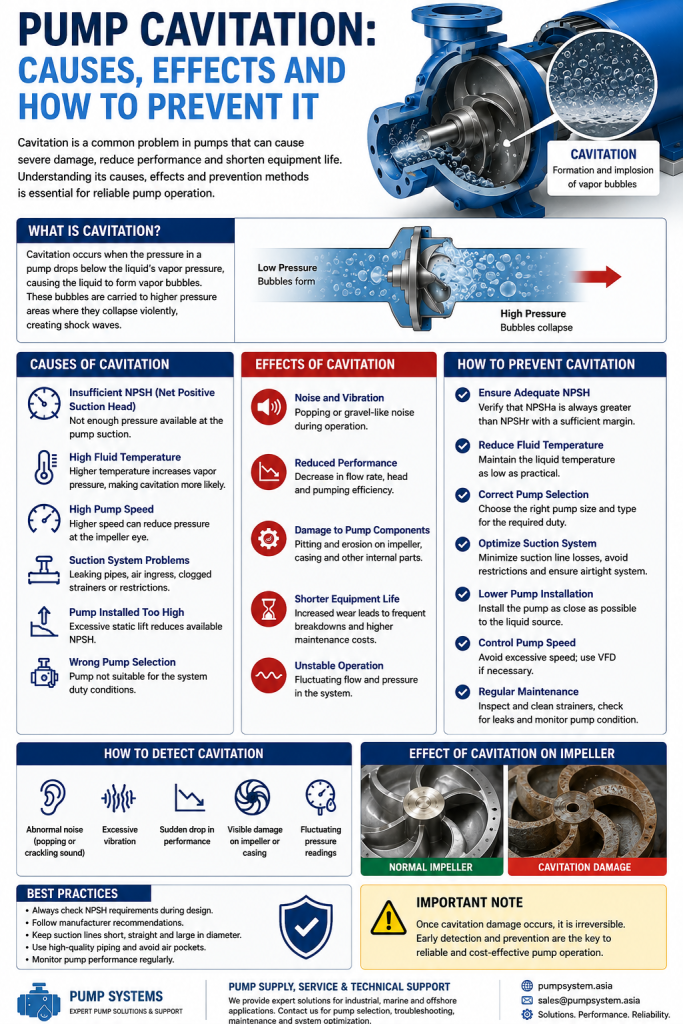
Pump cavitation is one of the most common problems encountered in industrial pumping systems. If left unresolved, cavitation can cause severe damage to impellers, mechanical seals, bearings, and pump casings, leading to costly repairs and unexpected downtime.
Understanding the causes, warning signs, and prevention methods of pump cavitation can help improve equipment reliability and extend pump service life.
What Is Pump Cavitation?
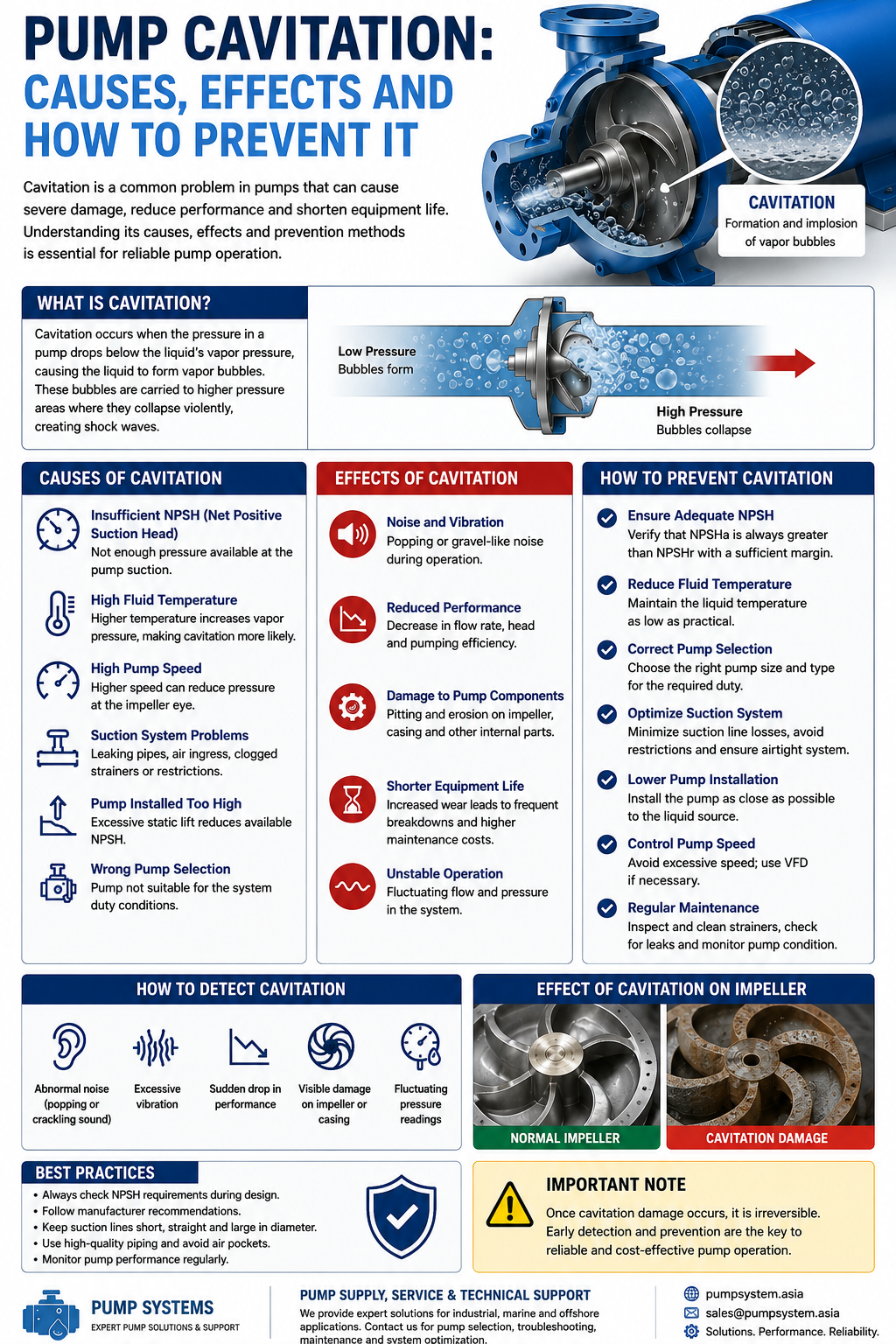
Pump cavitation occurs when the pressure at the pump suction falls below the liquid’s vapor pressure, causing vapor bubbles to form inside the pump.
As these vapor bubbles travel into higher-pressure regions within the pump, they rapidly collapse or implode. The implosion generates shock waves that can damage internal pump components.
Cavitation is often described as the pump “boiling” the liquid due to insufficient suction pressure.
Common Causes of Pump Cavitation
Several operating conditions can contribute to cavitation.
Low Net Positive Suction Head (NPSH)
Low NPSH is one of the most common causes of cavitation.
When the available NPSH (NPSHa) is lower than the pump’s required NPSH (NPSHr), vapor bubbles begin to form at the impeller eye.
Common reasons include:
- Low liquid level in the suction tank
- Long suction pipe runs
- Excessive suction lift
- Undersized suction piping
- High fluid temperature
Blocked Suction Line
Restrictions in the suction line can reduce pressure at the pump inlet.
Common examples include:
- Clogged strainers
- Blocked filters
- Partially closed valves
- Debris accumulation
Even minor restrictions can significantly affect pump performance.
High Fluid Temperature
As liquid temperature increases, vapor pressure rises.
Hot liquids require higher suction pressure to prevent vapor formation inside the pump.
This is particularly common in:
- Boiler feedwater systems
- Hot water circulation systems
- Thermal oil systems
- Condensate return systems
Excessive Pump Speed
Operating a pump beyond its design speed increases flow velocity and reduces pressure at the impeller inlet.
This condition can trigger cavitation, especially in variable-speed pumping systems.
Poor System Design
Improper piping layouts often contribute to cavitation.
Examples include:
- Excessive pipe bends near the pump suction
- Small suction pipe diameters
- Sudden pipe reductions
- Poor suction tank arrangements
Proper piping design is critical for maintaining stable suction conditions.
Signs of Pump Cavitation
Early detection can prevent costly damage.
Unusual Noise
A cavitating pump often produces sounds similar to:
- Gravel passing through the pump
- Marbles rattling inside the casing
- Crackling or popping noises
These sounds result from collapsing vapor bubbles.
Excessive Vibration
The implosion of vapor bubbles creates pressure fluctuations that increase vibration levels.
Excessive vibration can damage:
- Bearings
- Mechanical seals
- Couplings
- Motor components
Reduced Pump Performance
Cavitation frequently causes:
- Lower flow rates
- Reduced discharge pressure
- Unstable operation
- Efficiency losses
The pump may struggle to achieve its designed operating point.
Increased Power Consumption
As hydraulic efficiency decreases, the pump may consume more energy while delivering less flow and pressure.
Physical Damage
Severe cavitation can cause:
- Pitting on impeller surfaces
- Erosion of pump casings
- Mechanical seal failures
- Premature bearing wear
The damage often appears as a rough, sponge-like surface on metal components.
Effects of Pump Cavitation
Ignoring cavitation can lead to significant operational problems.
Impeller Damage
Impellers are usually the first components affected.
Repeated bubble implosions gradually remove metal from the impeller surface, reducing hydraulic performance.
Mechanical Seal Failure
Excessive vibration caused by cavitation places additional stress on mechanical seals.
This can result in leakage and premature seal failure.
Bearing Damage
High vibration levels accelerate bearing wear and shorten bearing life.
Bearing replacement costs can become significant if cavitation persists.
Reduced Equipment Life
Continuous cavitation reduces the lifespan of:
- Pump casings
- Shafts
- Couplings
- Motors
- Piping systems
Increased Maintenance Costs
Frequent repairs and unplanned shutdowns can significantly increase maintenance expenses.
How to Prevent Pump Cavitation
Preventing cavitation is usually easier and less costly than repairing the damage it causes.
Increase Available NPSH
Improving suction conditions is often the most effective solution.
Methods include:
- Raising liquid levels
- Lowering pump elevation
- Increasing suction pipe diameter
- Reducing suction pipe length
Higher NPSHa reduces the risk of vapor formation.
Reduce Suction Line Restrictions
Regularly inspect and maintain:
- Strainers
- Filters
- Suction valves
- Suction piping
Removing restrictions helps maintain adequate inlet pressure.
Lower Fluid Temperature
Where possible, reducing liquid temperature can lower vapor pressure and improve suction conditions.
This is especially important in hot water and boiler applications.
Use Proper Suction Piping Design
Good piping practices include:
- Short suction pipe runs
- Minimal pipe bends
- Larger suction diameters
- Gradual pipe transitions
Proper design reduces friction losses and pressure drops.
Operate Within Pump Design Limits
Avoid operating pumps far outside their Best Efficiency Point (BEP).
Running too far left or right of the pump curve can increase the likelihood of cavitation.
Select the Correct Pump
In some cases, the existing pump may not be suitable for the application.
Factors to review include:
- NPSHr requirements
- Flow rate requirements
- System head requirements
- Fluid characteristics
Proper pump selection is critical for long-term reliability.
Conclusion
Pump cavitation is a serious condition that can reduce efficiency, increase energy consumption, and cause extensive equipment damage. Common causes include low NPSH, blocked suction lines, excessive fluid temperatures, and poor piping design.
By understanding the warning signs and implementing proper preventive measures, plant operators can minimise downtime, reduce maintenance costs, and extend pump service life.
Regular inspections, proper system design, and correct pump selection remain the most effective strategies for preventing pump cavitation and maintaining reliable operation.