Selecting the right pump is critical for ensuring reliable performance, energy efficiency, and long-term system reliability. Choosing an undersized or oversized pump can lead to excessive energy consumption, cavitation, equipment failure, and increased maintenance costs.
This pump selection guide outlines the key factors engineers, facility managers, contractors, and building owners should consider when selecting a pump.
Why Proper Pump Selection Matters
A correctly selected pump helps to:
- Improve system efficiency
- Reduce operating costs
- Extend equipment lifespan
- Minimize downtime
- Reduce maintenance requirements
- Improve process reliability
Poor pump selection often results in excessive energy usage and premature pump failure.
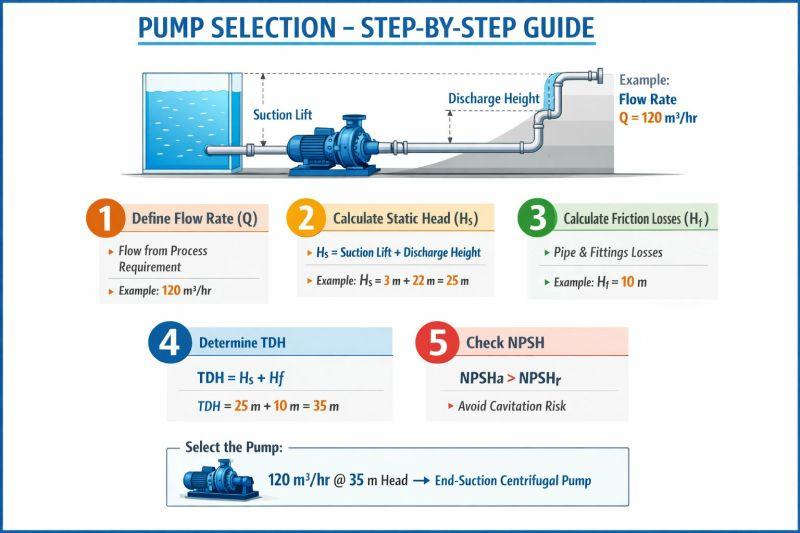
Step 1: Determine the Required Flow Rate
Flow rate is the amount of liquid that needs to be transferred within a specific period.
Common flow units include:
- m³/h (cubic metres per hour)
- L/min (litres per minute)
- GPM (gallons per minute)
Typical applications include:
| Application | Typical Flow Requirement |
|---|---|
| Domestic Water Supply | Low to Medium |
| HVAC Systems | Medium to High |
| Cooling Water Systems | Medium to High |
| Industrial Process Water | Variable |
| Sewage Transfer | Medium to High |
Accurate flow calculations are essential before selecting a pump.
Step 2: Calculate Total Head
Head represents the total pressure the pump must overcome.
Static Head
Static head includes:
- Vertical lift
- Tank elevation differences
- Water level variations
Friction Loss
Friction losses occur due to:
- Pipe length
- Pipe diameter
- Valves
- Fittings
- Strainers
- Heat exchangers
Total Dynamic Head (TDH)
Total Dynamic Head is calculated by combining:
- Static head
- Friction losses
- Pressure requirements
The pump must deliver the required flow at the calculated TDH.
Step 3: Understand the Liquid Characteristics
The pumped liquid significantly affects pump selection.
Clean Water
Common pump types:
- End suction pumps
- Vertical inline pumps
- Multistage pumps
Wastewater & Sewage
Recommended pumps:
- Submersible sewage pumps
- Vortex pumps
- Grinder pumps
Chemicals
Suitable pumps include:
- Chemical dosing pumps
- Magnetic drive pumps
- Stainless steel pumps
High Temperature Liquids
Applications may require:
- Boiler feed pumps
- Hot water circulation pumps
- Thermal oil pumps
Always consider temperature, viscosity, solids content, and chemical compatibility.
Step 4: Select the Appropriate Pump Type
End Suction Pumps
Suitable for:
- Water transfer
- HVAC systems
- Industrial circulation
Examples:
- Grundfos NK Series
- Grundfos NB Series
Vertical Inline Pumps
Suitable for:
- Chilled water systems
- HVAC circulation
- District cooling
Examples:
- Grundfos TP Series
- Monoflo VTP Series
Vertical Multistage Pumps
Suitable for:
- Pressure boosting
- Boiler feed systems
- Water treatment
Examples:
- Grundfos CR Series
- Grundfos CRN Series
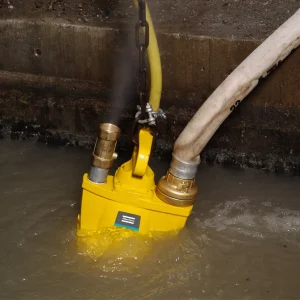
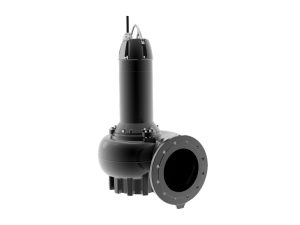
Submersible Pumps
Suitable for:
- Sewage systems
- Drainage
- Wastewater transfer
Examples:
- Grundfos SE Series
- Grundfos SL Series
Dosing Pumps
Suitable for:
- Chemical injection
- Water treatment
- Industrial processes
Examples:
- Grundfos DDA Series
- Grundfos DDC Series
Step 5: Verify NPSH Requirements
Net Positive Suction Head (NPSH) is critical to prevent cavitation.
Ensure:
NPSHa > NPSHr
Insufficient NPSH can cause:
- Cavitation
- Excessive vibration
- Reduced performance
- Mechanical seal failure
- Impeller damage
Proper suction design is essential.
Step 6: Consider Motor & Power Supply Requirements
Important considerations include:
- Single phase or three phase
- Voltage availability
- Frequency (50Hz or 60Hz)
- Motor efficiency
- Variable speed operation
Common motor options:
- IE2 Motors
- IE3 Motors
- IE4 Motors
- Variable Frequency Drives (VFD)
Step 7: Evaluate Installation Conditions
Consider:
Indoor Installation
Suitable for:
- Plant rooms
- Utility rooms
- Mechanical spaces
Outdoor Installation
May require:
- Weather protection
- Corrosion-resistant materials
- Special motor protection
Hazardous Areas
May require:
- ATEX-certified pumps
- Explosion-proof motors
- Special sealing arrangements
Common Pump Selection Mistakes
Avoid:
- Oversizing the pump
- Ignoring friction losses
- Selecting the wrong pump type
- Underestimating liquid properties
- Ignoring NPSH requirements
- Focusing only on initial cost
A properly sized pump typically delivers the lowest life-cycle cost.
Why Work with an Experienced Pump Supplier?
An experienced pump supplier can assist with:
- Pump sizing calculations
- System design review
- Energy efficiency analysis
- Pump replacement recommendations
- Spare parts support
- Technical troubleshooting
Professional pump selection helps improve performance while reducing operating costs.
Explore More Pump Brands
- Grundfos Pumps
- Wilo Pumps
- Lowara Pumps
- EBARA Pumps
- Monoflo Pumps
- Calpeda Pumps
- Pedrollo Pumps
- Kawamoto Pumps
Contact Us
Need help selecting the right pump for your application?